
Save First, Flex Later: The Gen Z Money Rule That Actually Works
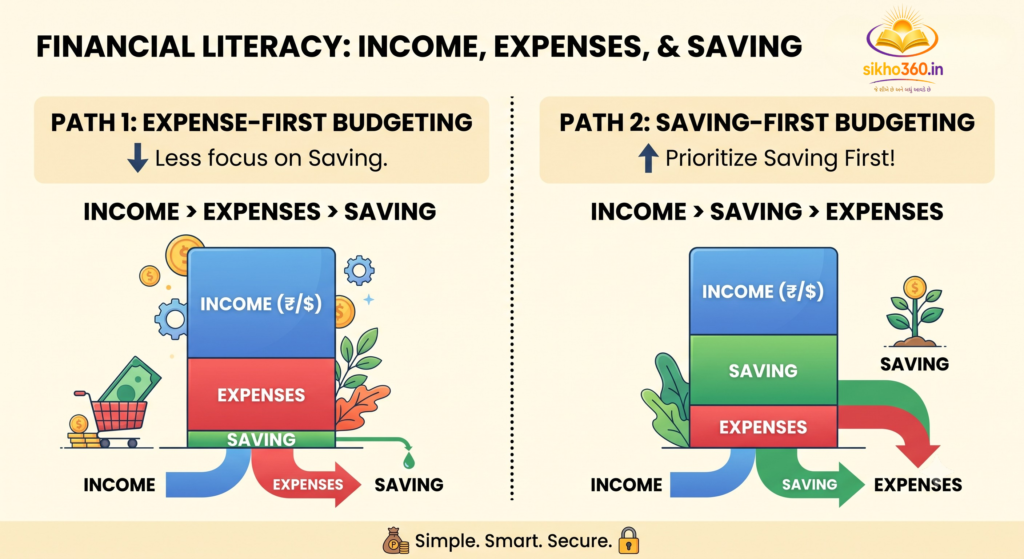
Let’s be real. Most of us were taught money like this:
Get paid → Pay rent + bills + Swiggy + that random Amazon “need” → Look at what’s left → Cry → Promise to “save next month.”
Next month never comes. Your bank balance looks like it’s on a strict diet while your expenses are living their best life.
There’s a better (and slightly unhinged) way: Save first. Then spend what’s left.
Not “save if something is left.” Save before anything else happens. Treat your savings like that one friend who always gets paid first — non-negotiable.
Why the old way is cooked?
The classic “spend then save” method is basically leaving your future self on read.
Your brain is wired for dopamine now. That ₹399 coffee, the new sneakers drop, the group trip that “we’ll figure out later” — all of it feels more urgent than some abstract future where you’re financially free and not refreshing Cred for the 4th time.
By the time the month ends, the money has already ghosted you.
The “Pay Yourself First” glow-up
Here’s the simple flip:
Salary hits your account.
Instantly move a fixed amount (or percentage) to savings/investments.
Live on whatever remains like it’s the only money that exists.
It feels weird for the first 2–3 months. Then it starts feeling like a superpower. You stop asking “Can I afford this?” and start asking “Does this fit into what’s left?” — and somehow you still get to enjoy life.
How to actually do it without becoming a boring finance bro
Start ridiculously small.
Even 5–10% is fine. If you earn ₹30k, move ₹1,500–3,000 on day one. Don’t wait till you “earn more.” Future you with higher income will still find ways to spend it if the habit isn’t there.
Automate it like your life depends on it.
Set an auto-transfer the same day salary comes. Out of sight = out of mind = you can’t impulse-buy your future.
Give the money a name.
“Emergency fund,” “Goa 2027,” “Don’t be broke at 30,” “Future soft life.” Nameless money is easier to raid. Named money feels personal.
Live on the rest without guilt.
This is the part most people miss. Once you’ve paid yourself, the remaining money is yours to spend. Guilt-free. No more mental math at 2 AM. You already did the hard part.
Relatable scenarios (because theory is mid)
Friend: “Bro trip to Goa next month?”
You (after saving first): “I can do ₹8k max. Let’s find a place.”
Instead of saying yes and then panic-selling your mutual funds.
Swiggy notification at 11:47 pm:
You glance at remaining balance and think, “Do I want this more than the thing I’m saving for?” Sometimes yes. Sometimes you just make Maggi like a legend.
That sale that “ends in 3 hours”:
If it doesn’t fit in what’s left, it wasn’t meant for you. The universe (and the algorithm) will try again next week.
The real flex
People think saving is about being cheap. Nah.
Saving first is about having options.
It’s the difference between “I have to work this job forever” and “I can walk away if I want.”
It’s quieter confidence. Less money stress. More ability to say no without drama.
You don’t have to become that person who tracks every chai. You just have to stop treating savings like an optional side quest.
Start this month. Even if it’s tiny. Especially if it’s tiny.
Your future self is already looking at current you like, “Finally, king/queen behaviour.”
Save first. Then live.
The money that remains will stretch further than you think — and you’ll actually enjoy spending it.